Approach
My Approach: Sports Medicine, Hands-On Care, and Movement
Pain relief is not the goal. It is the starting point.
My work is grounded in modern Western sports medicine — anatomy, physiology, pathology, and biomechanics. I use that foundation to understand why a problem developed, calm it down with hands-on care, and rebuild the movement capacity that keeps it from coming back.
After years of practice, my conclusion is simple: most musculoskeletal pain is the result of a decline in how well the body moves and copes with daily load. So the real goal is to restore that capacity — and keep it.
How this differs from typical chiropractic or physical therapy
Chiropractic and physical therapy help many people, and many of my patients have tried one or both. In many offices, though, care follows a routine: spinal adjustments, sometimes with traction, lasers, or other machines, or a standard set of exercises for a diagnosis.
I am fully trained in spinal manipulation and use it when it fits. But it is not the center of my care, for a simple reason: manipulation alone does not change how a person moves. It does not treat tendon or muscle injuries, improve movement quality, or explain why pain keeps coming back. Most athletic injuries and musculoskeletal problems involve soft tissue — muscles, tendons, ligaments, and nerves — rather than the spine itself.
A 10-year-old athlete, a working professional, and a 90-year-old may have similar symptoms, but their care should not look the same. I treat the person, not the diagnosis.
Understanding why the problem developed
Labels like “bad posture” or “misalignment” are easy to give. The harder and more important work is answering questions like these:
- Why did load build up in this particular tissue?
- How have your movement patterns changed over time?
- How did past injuries shape the way you compensate?
- Why can your body no longer tolerate normal daily stress?
That is why I look beyond the painful spot — at how you stand, walk, and move, your training history and daily habits, and how sleep, stress, and recovery affect you. A diagnosis such as knee osteoarthritis or a disc problem matters, but it is often the result of an underlying loss of movement capacity, not the whole explanation.
The role of hands-on care
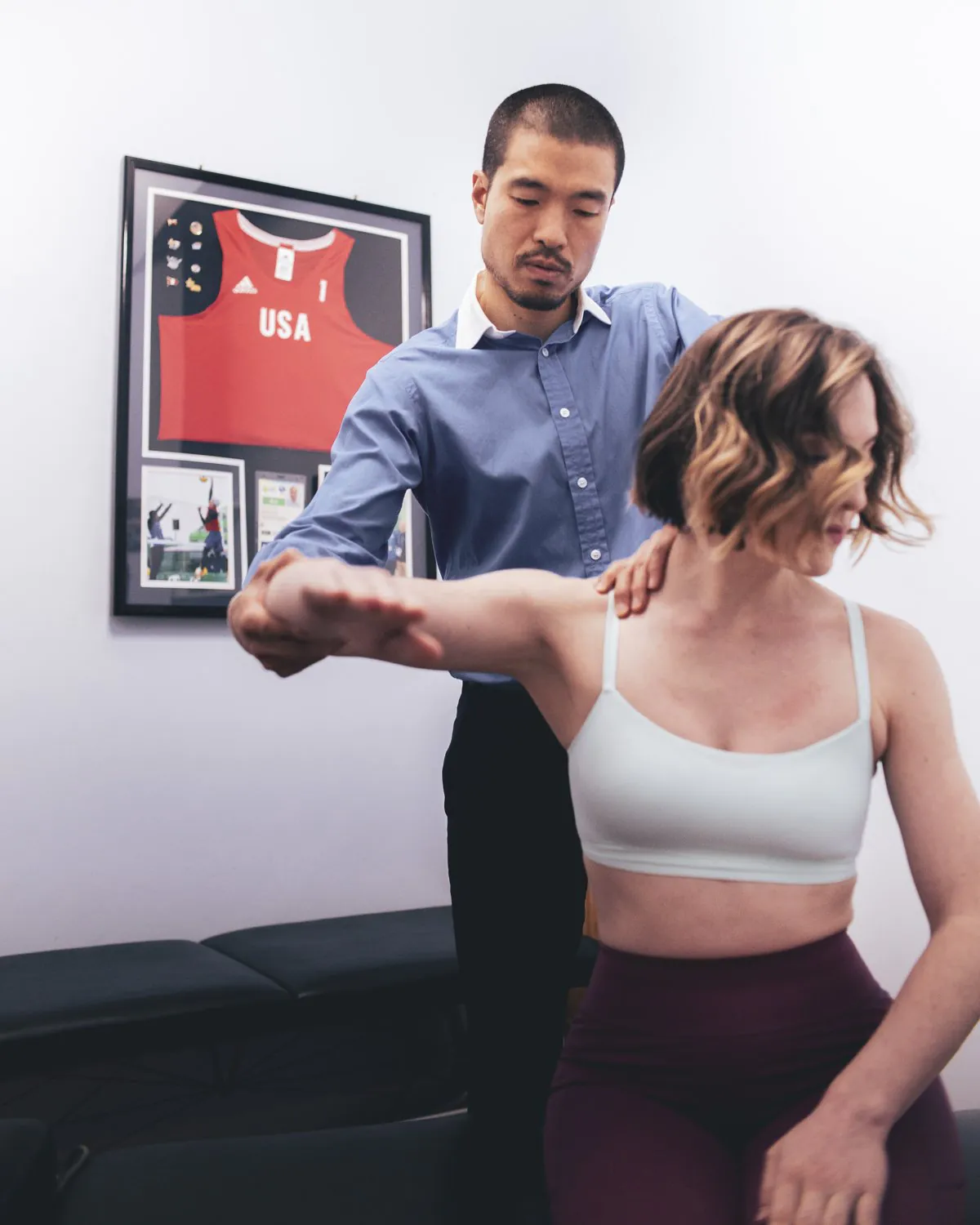
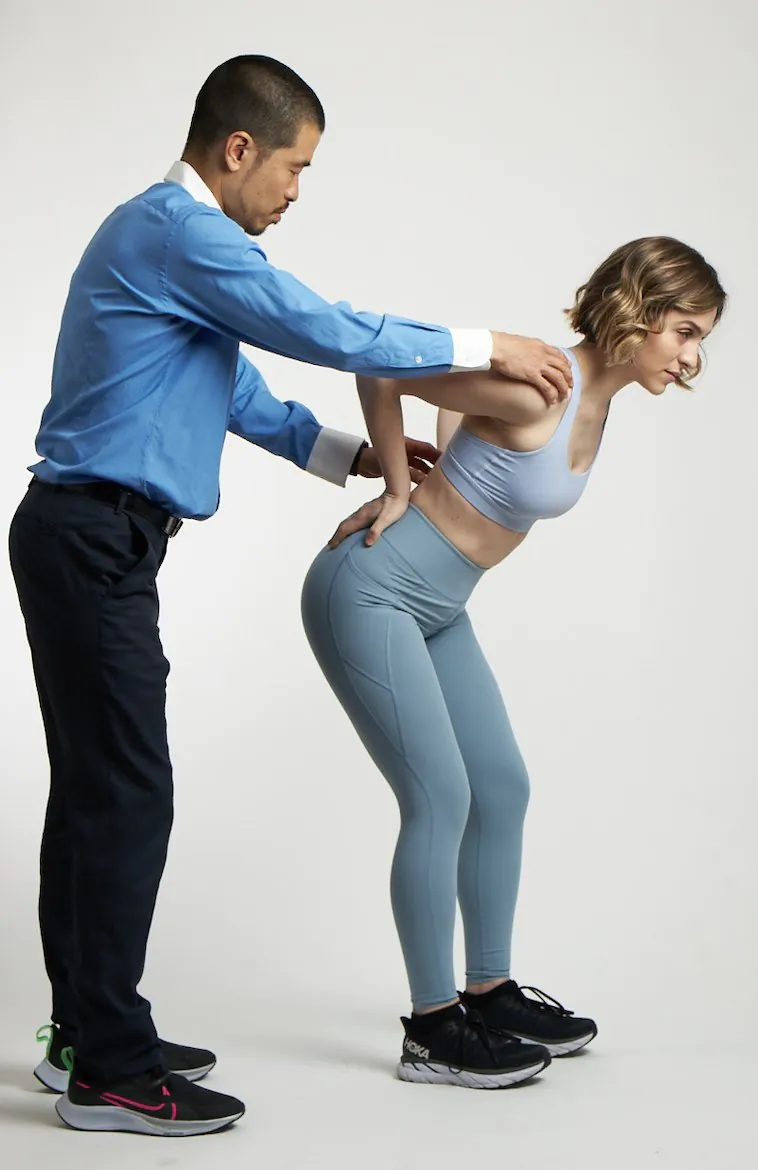
In Olympic and elite sports, hands-on assessment and manual therapy are central to daily care — not because they are passive, but because they show quickly whether an athlete is truly ready to move. To an observer, manual therapy can look the same everywhere. What differs is the clinical judgment behind it: understanding anatomy and pathology, applying force with clear intent, and reassessing range of motion and tissue response as we go.
I have trained in many hands-on methods and keep learning every year. None of them is the answer by itself. I choose what fits the tissue and the person in front of me that day.
Movement and training
Treatment opens the door; training keeps it open. As pain settles, care shifts from passive to active — first relearning how to move, then building strength and endurance step by step.
Long-term health stands on two pillars:
- Aerobic capacity — the ability to keep going, recover, and stay energetic
- Strength — the ability to support yourself, stay balanced, and stay independent
In the early stages the rule is “less provocation, not more effort.” We stay well inside a safe zone and progress based on how your body responds the next day.
From the Clinical Insights series
Working within modern medicine
When imaging is clinically appropriate, I order X-rays or MRI directly. In a small percentage of cases, surgical, injection-based, or medication-based care is needed, and I refer without hesitation and work with orthopedic and pain management physicians. I avoid unnecessary interventions and prioritize long-term function over temporary fixes.
A perspective shaped in Japan
Before coming to the United States, I studied Eastern medicine at a Japanese university and spent years treating patients at my family’s clinic, Nakano Seitai, founded in 1926. That background taught me a principle I still use every day: don’t examine only the tree — understand the forest it belongs to.
This is not Eastern medicine or alternative care. It is Western sports medicine, informed by a broader understanding of how the body adapts, compensates, and recovers over time.
See how it works for you
Most people can tell within one to four visits whether this approach fits them. The first visit is where we find out what is going on and what to do next.